VerifiedFact Checked
How to safely manage your medications over summer

How to safely manage your medications over summer

From sunny beaches to luxurious resorts, summer is (for most) a season filled with excitement and adventure. But if you're on medication, there are some things you need to know.

Taking temperature-sensitive medication on long-haul flights can pose challenges, for example, and mixing your favorite summer cocktails with certain treatments may lead to side effects. But fear not. Read on to find out how to safely manage your treatment during the summer months.

Daniel Atkinson
Medically reviewed by
Daniel Atkinson, Clinical Reviewer
Go to
Reviewed on Aug 07, 2026. by Dr Daniel Atkinson Clinical Reviewer Registered with GMC (No. 4624794) Next review due on Aug 07, 2029.
Daniel

Last updated on Aug 14, 2026.

Was this article useful?
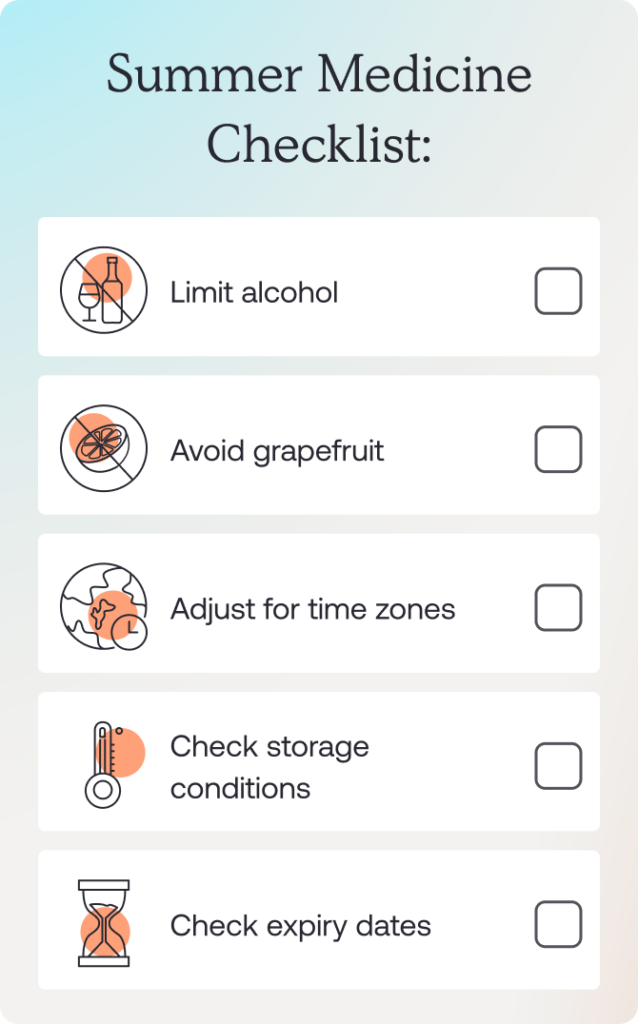
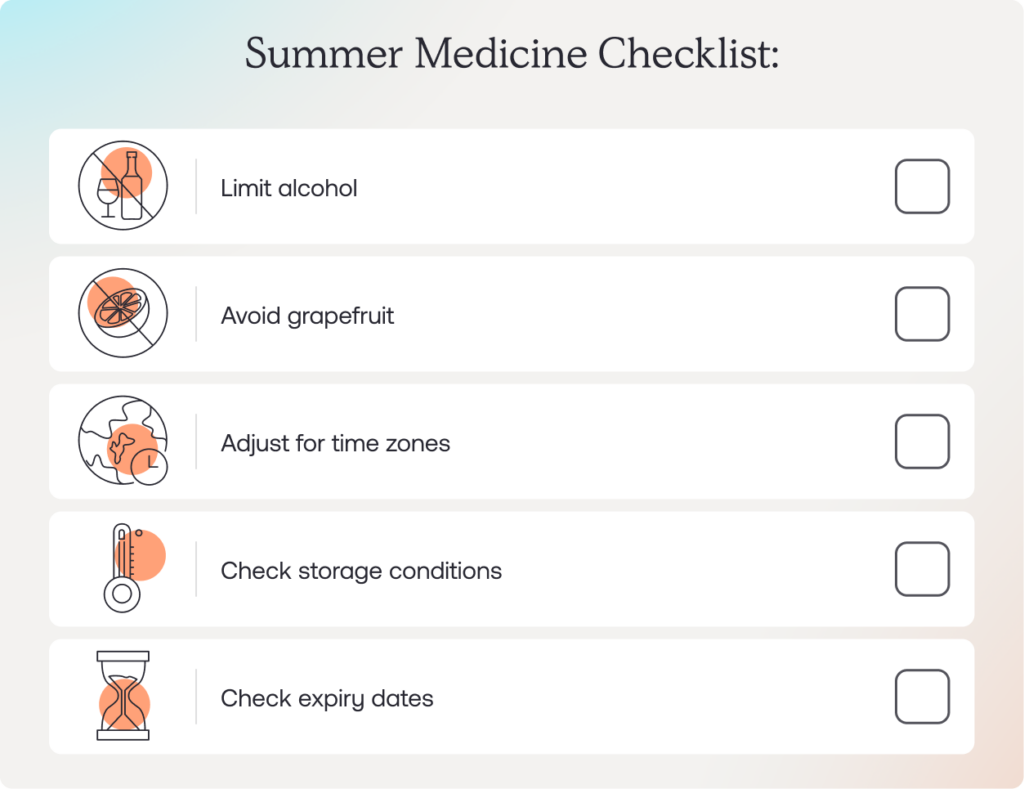
An infographic titled "Summer Medicine Checklist:" listing five steps for medication safety during summer with line icons and empty checkboxes.
Summer-Medicine-Checklist

Limit alcohol

Sipping an Aperol Spritz (or three) on the beach or ‘getting your money’s worth’ from bottomless brunch might seem like harmless summer fun. But if you’re taking medication, alcohol can affect how well it works or make side effects worse. Here’s what you need to know.

  • Increased risk of side effects: Alcohol can worsen the side effects of medications, making you feel dizzy, drowsy, or tired. For instance, mixing alcohol with certain antibiotics can worsen nausea and headaches, or combining alcohol with antidepressants can make you feel sleepy and lower your blood pressure.
  • Unexpected effects: Alcohol can alter the way some medications work. For example, drinking alcohol while taking aspirin can increase the risk of stomach irritation and bleeding. This is due to the combined effects of alcohol and aspirin on the stomach lining and blood clotting. Additionally, regular excessive alcohol consumption, particularly when combined with high or repeated doses of acetaminophen, can also increase the risk of liver damage.
  • Sudden severe reactions: You should never mix alcohol with certain treatments, like metronidazole (an antibiotic). This is because it can trigger sudden severe reactions, including intense vomiting and rapid heartbeat. These reactions often require medical attention and can pose serious risks to your health.
  • Post-vomiting effects: Vomiting after drinking alcohol can make medications, including contraceptives, less effective. So if you vomit within a few hours of taking your oral contraceptive, for example, you may be less protected from pregnancy.
  • Decreased blood pressure: Alcohol, when combined with blood pressure medications like amlodipine, can cause your blood pressure to drop too low, making you feel dizzy.

Always check the information in your patient package insert to see whether alcohol will interact with your medicine. Or you can search for information on MedlinePlus to see if your treatment has any interactions with alcohol.

Avoid grapefruit

Grapefruit contains a substance called furanocoumarins, which stops your stomach enzymes from breaking down drugs normally. This causes more of the medication to enter your bloodstream, potentially increasing side effects and reactions.

There are over 80 drugs known to interact with grapefruit, including:

  • Statins
  • Immunosuppressants
  • Antibiotics
  • Antivirals

So next time you go for a cocktail, double-check to make sure that it doesn’t contain grapefruit.

Adjust for time zones

When traveling to different countries, it can be helpful to account for the time zone. This is because some medications are most effective when taken at the same time each day because they’re designed with specific intervals in mind. So if you travel somewhere that’s an hour ahead, for example, you’ll need to take your medication an hour later than you normally would (according to the local time). An easy way to do this could be to keep an analog clock or watch in your home time zone while you’re away and follow this for your medications. But the advice can vary by medication, so always check the instructions for your specific medicine before traveling.

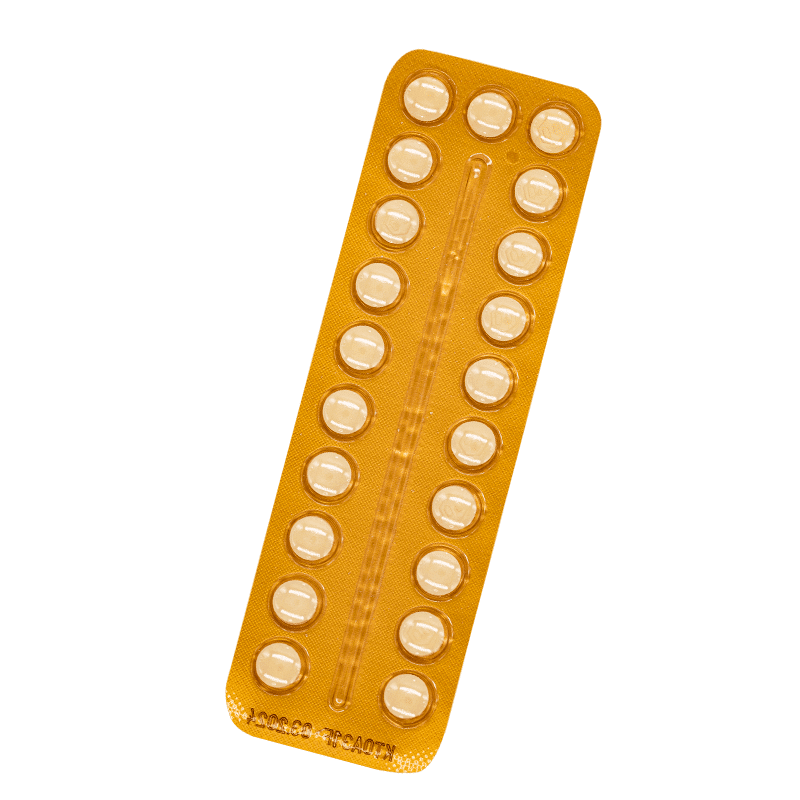
For example, contraception should be taken at consistent, regular intervals for it to work best. Taking it too late or missing a day reduces your pregnancy protection. If this happens, you’ll have to use a barrier contraceptive method for the next seven days while your protection builds back up – but check the guideline for the contraceptive you’re taking as this can vary for each medication.

Blood pressure medicine should also be taken at the same time each day to make sure your blood pressure remains at a steady level. Taking it too early or too late can cause either low or high blood pressure. Adding an alarm to match the time you would take your medicine at home can make it easier to remember to take it at the correct time.

When traveling to a country that’s a day ahead or behind, managing a treatment schedule can become complicated. For instance, taking a weekly weight-loss injection sooner than scheduled can lead to high concentrations of the drug in your system, potentially triggering side effects. Adding your treatment schedule to your calendar or setting an alert aligned with the time you would typically take it at home can be helpful.

Check expiration dates

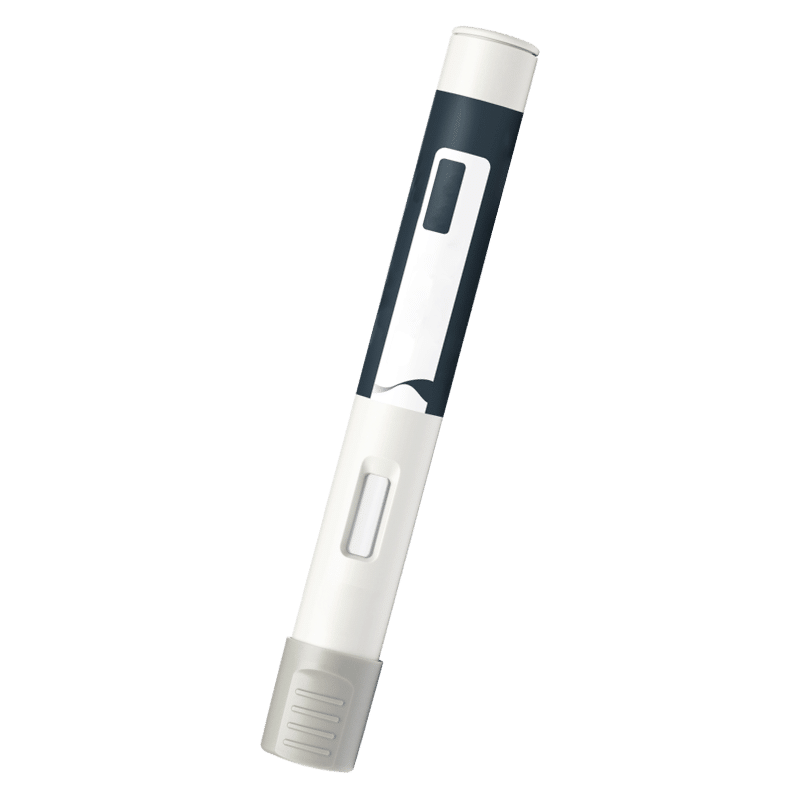
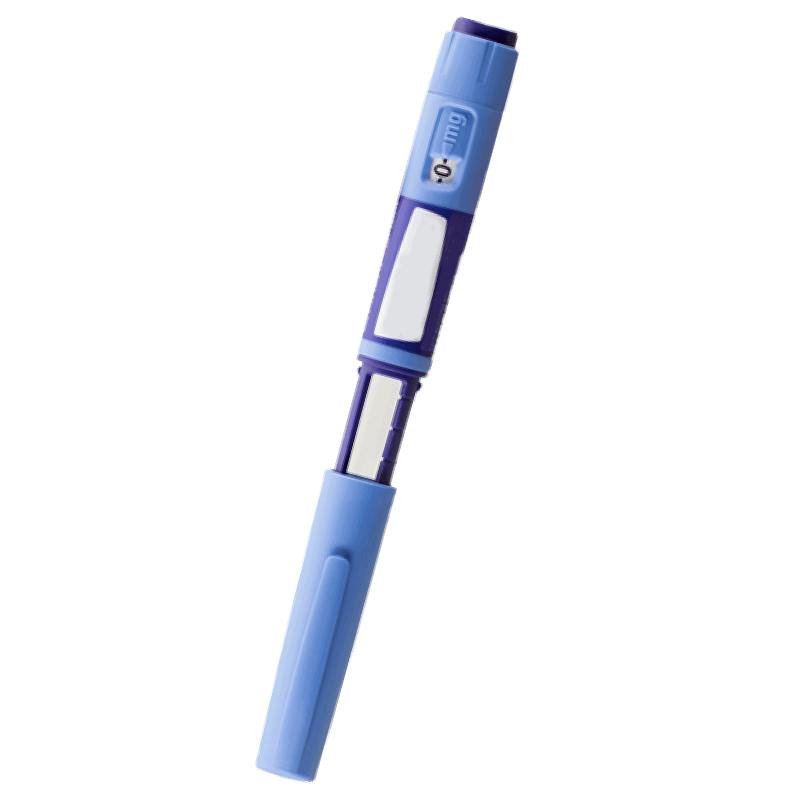
Before traveling to a new country, check that your medications won’t expire while you’re there. This is especially important for certain treatments like weight-loss injections, as they have strict room-temperature limits once removed from cold storage. For example, Wegovy pens can stay at room temperature for up to 28 days, while Zepbound pens can only be kept at room temperature for up to 21 days. Refrigerated pens last longer (up to the printed expiration date on the packaging) as long as they remain chilled. So if you’re traveling for several weeks or months, check that you have enough medicine and that it’s all well within its expiration date.

Ensure your medicine stays the correct temperature

Some medications are affected by temperature, and if they’re not stored correctly they can spoil. These medicines include:

  • Weight loss injections: Pens should be kept refrigerated between 36°F and 46°F (2°C to 8°C) until ready to use. If kept at room temperature while traveling, make sure they aren’t exposed to direct heat above 86°F (30°C) and never allow them to freeze.
  • Insulin: Unopened insulin can be kept in the refrigerator. Once opened, it can be left at room temperature for a limited time.
  • HRT patches or contraceptive patches: These should be stored at room temperature. Avoid exposing them to high temperatures, such as in saunas, sunbathing, or hot tubs, as this can cause the medication to be released more quickly.
  • EpiPens: These should be stored at room temperature and shouldn’t be exposed to extreme heat (above 77°F / 25°C) or cold (don’t refrigerate or freeze them).

If you’re traveling in hot conditions, make sure to keep your medications in a cool pack and store them in your carry-on bag rather than checked luggage if you’re flying. This is because cargo holds can reach freezing temperatures. You can also get travel insulated cases that help maintain the right temperature for your medications.

Planning a trip? Get expert advice

Honest ExpertiseIf you want to know how to travel safely with your medications, check the patient package insert that comes with your medicines. If you still have questions or need more information, you can speak to our clinicians online.


Reference Popover #ref1

Sourcing guidelines:

When we present you with stats, data, opinion or a consensus, we’ll tell you where this came from. And we’ll only present data as clinically reliable if it’s come from a reputable source, such as a state or government-funded health body, a peer-reviewed medical journal, or a recognised analytics or data body. Read more in our editorial policy.

Tell us what you want to hear.

Have a subject you’d like us to cover in a future article? Let us know.

Give us the inbox treatment.

We're making healthcare more about you. Sign up to our newsletter for personalized health articles that make a difference.

Disclaimer: The information provided on this page is not a substitute for professional medical advice, diagnosis, or treatment. If you have any questions or concerns about your health, please talk to a doctor.

Suggest a health guide

Tell us your idea here.

(And leave your email too, so we can let you know if we write an article based on your suggestion.)