

VerifiedFact Checked
Weight loss patches: Do they actually work?

Weight loss patches: Do they actually work?

Weight loss patches are a form of alternative medicine. Although you might see them referred to as GLP-1 patches, they don’t actually contain any GLP-1 medication (or any licensed medications, for that matter).

They contain a range of herbal or supplement ingredients that sellers claim can help you lose weight, but there’s little evidence to support this.

Alexandra Cristina Cowell
Medically reviewed by
Alexandra Cristina Cowell, Writer & Clinical Content Reviewer
Go to
Reviewed on Jan 02, 2026. by Dr Alexandra Cristina Cowell Writer & Clinical Content Reviewer Next review due on Jan 02, 2029.
Alexandra Cristina

Last updated on Apr 27, 2026.

Was this article useful?
Summary:
  • Weight loss patches don’t contain any actual GLP-1 medication. Instead, they contain a mix of herbal supplements and other substances.
  • No clinical evidence supports their effectiveness for weight loss.
  • Because they’re unregulated, their safety isn’t guaranteed, and they come with a risk of skin irritation and hidden ingredients.

If you’re looking for safe and legitimate weight loss treatment that’ll actually work, it’s better to choose regulated, prescription options. According to available research, the two most effective licensed treatments available currently are Wegovy and Zepbound.

How do weight loss patches claim to work?

Weight loss patches work by releasing ingredients through the skin (transdermally), much like a nicotine patch, to release ingredients directly into your bloodstream. Depending on the patch, these ingredients might be botanical extracts like green tea extract or garcinia cambogia, stimulants like caffeine, amino acids like L-Carnitine, or a combination of all of the above.

There is some evidence that some of these ingredients can provide weight loss benefits. However, this evidence tends to be:

a) conflicting or inconclusive;
b) based on ingesting these ingredients, rather than direct absorption;
c) based on animal studies rather than human ones.

No rigorous tests or trials have confirmed that weight loss patches help people lose weight.

Do weight loss patches contain GLP-1?

No, the weight loss patches currently on the market don’t contain GLP-1 or any of the active ingredients found in prescription treatments like Ozempic, Wegovy, or Zepbound.

While these products are often marketed as ‘GLP-1 patches’ or ‘needle-free alternatives’, they’re fundamentally different from medical treatments.

Instead, weight loss patches contain a varied range of ingredients from patch to patch. Typically, they contain botanical extracts like green tea or green coffee extract, as well as other ingredients like vitamins or amino acids. These ingredients are said to boost your metabolism or suppress your appetite.

Here are some examples you might see included:

Category Ingredient Claimed role
Herbal extracts Green tea extract Contains antioxidants and caffeine, said to increase metabolism and fat burning.
Garcinia cambogia Contains hydroxycitric acid (HCA), claimed to reduce appetite and fat production.
Guarana A source of caffeine, providing an energy boost and potential metabolism support.
Bitter orange (synephrine) A stimulant that may help with metabolism.
Berberine A plant compound sometimes used for blood sugar support.
Japanese mint Used for its aromatic and potentially metabolic properties.
Vitamins & minerals B vitamins (B1, B2, B3, B6, B9, and B12) Often included to support energy metabolism.
Chromium Believed by some to help with appetite control.
Amino acids & other compounds L-Carnitine An amino acid that helps with fat burning and energy.
5-HTP Sometimes added for mood and appetite.
Sophoricoside A compound from plants, often cited for fat breakdown.

Why don’t GLP-1 medications come in patches?

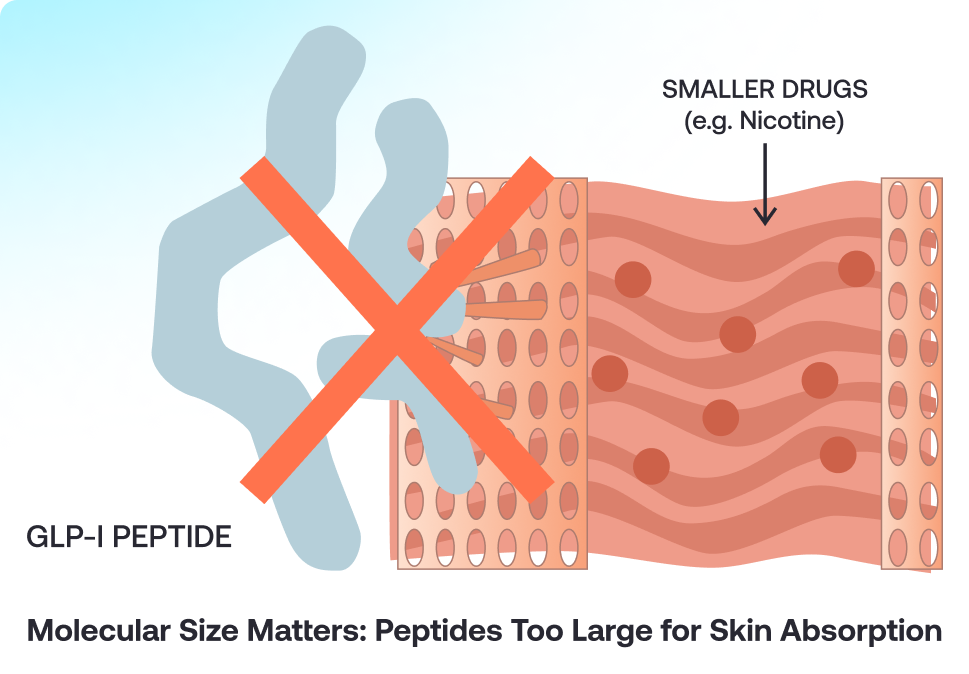
The active ingredients in prescription weight loss medications (such as semaglutide or tirzepatide) are large protein molecules called peptides. There are two primary reasons why they’re not available in patch form:

  1. GLP-1 medications are too large to pass through the skin barrier. While small molecules like nicotine or estrogen can be absorbed via a patch, GLP-1 molecules are roughly ten times larger than the limit for skin absorption.
  2. They’re delicate and typically require refrigeration or specific stabilization to be effective. They would likely break down before being absorbed through a standard adhesive patch.
An infographic titled "Molecular Size Matters," showing a large GLP-1 peptide blocked by a red "X" because it is too big to pass through skin pores, while smaller molecules like nicotine pass through easily.

How effective are weight loss patches?

There’s currently no scientific evidence that over-the-counter weight loss patches are effective for significant weight loss.

While the idea of melting fat away with a stick-on patch is appealing, regulatory bodies like the UK’s Advertising Standards Authority have consistently found that these products don’t deliver on their promises.

Most of the herbal ingredients in these patches (like green tea extract or garcinia cambogia) have very large molecules that are poorly absorbed through the skin. Even when taken orally, their weight loss effects are typically described as ‘clinically insignificant’.

Treatment Evidence level Average weight loss
Weight loss patches None Negligible / placebo effect
Diet and exercise High Around 5–9%
Prescription pills High Around 5–10%
GLP-1 injections High Around 15–20%

Have any studies been carried out on weight loss patches?

Unlike prescription weight loss treatments, which need to pass rigorous clinical trials involving thousands of people, weight loss patches are sold as supplements – which aren’t subject to the same requirements.

This means there are virtually no peer-reviewed human studies showing that these patches cause weight loss.

Are weight loss patches safe?

Because weight loss patches are unregulated, using them can be risky.

Firstly, the adhesives and concentrated herbal extracts might cause redness, rashes, or contact dermatitis. Secondly, they often contain stimulant ingredients that can cause psychiatric side effects like heart palpitations and anxiety. And lastly, relying on ineffective patches might delay you from seeking evidence-based medical treatments that could actually help manage your weight and metabolic health.

Do weight loss patches have side effects?

Yes, weight loss patches can have several side effects. Because these products are unregulated supplements rather than medical-grade treatments, the risks range from minor skin irritation to more serious systemic issues caused by hidden or potent ingredients.

Skin irritation

Skin irritation is the most common one, and it can appear in a few different ways:

  • Contact dermatitis: Redness, itching, or a rash at the application site caused by the adhesive or the concentrated herbal extracts.
  • Dryness and sensitivity: Some patches can damage your skin barrier, leading to peeling or localised pain.
  • Blistering: In severe cases, people with sensitive skin or allergies to specific botanicals might develop small blisters.

Stimulant-related side effects

Many patches contain high doses of natural stimulants (like caffeine, green tea extract, or bitter orange) to try and ‘boost metabolism’. These can cause:

  • Heart palpitations (a rapid or irregular heartbeat)
  • Increased blood pressure (which is especially risky if you've got an existing heart condition)
  • Anxiety or jitters
  • Insomnia, especially if you wear the patch late in the day

Digestive or systemic issues

Even though the patch bypasses the stomach, the ingredients still enter your bloodstream. This can lead to:

  • Nausea and upset stomach: Common with ingredients like garcinia cambogia or berberine.
  • Headaches and dizziness: Often linked to stimulant content or dehydration.
  • Interactions with medications: Herbal ingredients can interfere with prescription drugs, including blood thinners, antidepressants, and diabetes medications.

The risk of hidden ingredients

Because these patches aren’t regulated by the FDA, there’s a significant risk of undeclared ingredients.

Regulatory agencies have previously found unlicensed weight loss treatments containing banned drugs like Sibutramine (a heart-risk stimulant removed from the market). These can cause dangerous spikes in blood pressure or liver damage.


Are any non-injectable GLP-1 medications available?

Yes, there are non-injectable GLP-1 medications available, but they’re mostly used to treat type 2 diabetes rather than for weight loss.

As of late 2025, the landscape for GLP-1 pills has expanded significantly. Here’s a summary of non-injection options:

Rybelsus

Rybelsus is approved by the FDA for type 2 diabetes. It contains the same active ingredients as Ozempic and Wegovy (semaglutide), but it’s a daily tablet rather than a weekly injection.

While it can contribute to weight loss, it’s not officially approved for it. Sometimes, a clinician may prescribe it off-label if they think it’ll be safe and effective for you.

High-dose oral semaglutide (‘Wegovy Tablet’)

Novo Nordisk have developed a higher-dose version of the semaglutide pill specifically for obesity. It was submitted for regulatory approval in 2025, and results from the OASIS 4 clinical trials showed weight loss of around 13.6%, which is comparable to the injectable version. It became available in the US under the brand-name ‘Wegovy Tablet’ in early 2026.

Orforglipron

Orforglipron is a new type of non-peptide GLP-1 receptor agonist developed by Eli Lilly. It’s currently in phase III clinical trials, which is the final stage before approval. And unlike Rybelsus, which has very strict rules around when and how to take it, Orforglipron is expected to have much simpler dosing requirements. Regulatory decisions are anticipated in 2026.

Finding a weight loss path that works

It’s easy to see why weight loss patches are popular. They promise the benefits of modern medicine without the needles or strict regulations. However, as the science shows, these ‘GLP-1 patches’ can’t deliver on those promises. At best, they’re expensive stickers; at worst, they contain unregulated stimulants that could put your health at risk.

If you’re looking for an effective way to manage your weight, you don’t have to settle for unproven supplements.

When you opt for a licensed treatment through a regulated provider, you’re getting:

  • A medication that’s been through years of clinical trials to prove it actually works.
  • Access to licensed clinicians who can screen you for contraindications and manage your side effects.
  • Exactly what you’ve been prescribed. Transparent ingredients, manufactured to the highest pharmaceutical standards.

Weight loss is a journey. And you shouldn’t have to travel it through trial and error with unregulated products. Whether you prefer a once-weekly injection or want to discuss upcoming oral GLP-1 options, we’re here to help you find a safe, evidence-based solution.

Reference Popover #ref1
Reference Popover #ref2
Reference Popover #ref3
Reference Popover #ref4
Reference Popover #ref5
Reference Popover #ref6
Reference Popover #ref7
Reference Popover #ref8
Reference Popover #ref9
Reference Popover #ref10
Reference Popover #ref11
Reference Popover #ref12
Reference Popover #ref13
Reference Popover #ref14

Sourcing guidelines:

When we present you with stats, data, opinion or a consensus, we’ll tell you where this came from. And we’ll only present data as clinically reliable if it’s come from a reputable source, such as a state or government-funded health body, a peer-reviewed medical journal, or a recognised analytics or data body. Read more in our editorial policy.

Tell us what you want to hear.

Have a subject you’d like us to cover in a future article? Let us know.

Give us the inbox treatment.

We're making healthcare more about you. Sign up to our newsletter for personalized health articles that make a difference.

Disclaimer: The information provided on this page is not a substitute for professional medical advice, diagnosis, or treatment. If you have any questions or concerns about your health, please talk to a doctor.

Suggest a health guide

Tell us your idea here.

(And leave your email too, so we can let you know if we write an article based on your suggestion.)